Stop Guessing What Participants Actually Thought

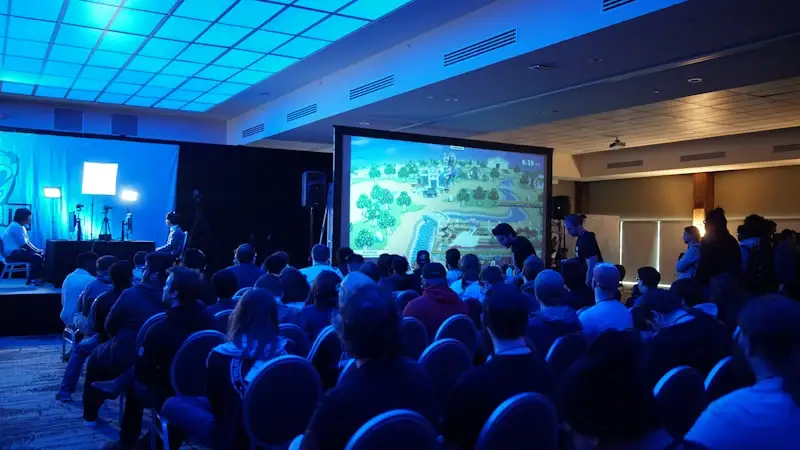
Small workshop seminar group discussion

QR Poll gives workshop facilitators anonymous participant feedback between sessions. Small group dynamics make verbal feedback unreliable — QR polls fix that.

Best for
Workshop facilitators, seminar leaders, retreat organizers
Setup time
30 seconds
Cost
Free up to 250 responses/mo, then $6/mo
No app required
Respondents scan with any phone camera

The Problem

Small group dynamics make verbal feedback unreliable. Nobody wants to criticize the facilitator in front of 12 colleagues. You get polite nods instead of actionable feedback. Multi-session workshops need feedback between sessions to adjust, but there's no time for lengthy surveys.

Ready to solve this?

Create your first poll in under a minute.

How QR Poll Helps

  • Anonymous feedback even in small groups. Psychological safety matters.
  • Quick pulse checks between sessions. Create a new poll in 30 seconds.
  • Review results during breaks. Adjust your approach for the next session.
  • No app downloads. Participants scan and respond. Done.

Sample Workshop Poll Questions

The best workshop polls are short and specific to the session that just ended. Generic "how was the workshop?" questions get generic answers. Here are questions that actually produce useful feedback.

  • After a teaching session: "How clear was the material?" (1-5 stars) plus "What concept needs more explanation?" (open text)
  • After a hands-on exercise: "Was the exercise time sufficient?" (yes/no) plus "What would have made it more useful?" (open text)
  • Mid-workshop energy check: "Current energy level?" (1-5 stars). Surprisingly revealing. If your afternoon session consistently scores 2s, the problem isn't your content. It's your scheduling.
  • End of day: "What should we spend more time on tomorrow?" (open text). This one question has saved more multi-day workshops than any amount of pre-planning.

Notice the pattern: one quick rating, one open text. Participants finish in under 30 seconds. You get signal you can act on immediately. Don't add a third question unless you have a specific reason.

The Break-Time Feedback Strategy

Here's the approach that works for multi-session workshops: poll during breaks, adjust in real time. It sounds obvious but almost nobody does it because paper evaluations are too slow and online survey tools are too heavy.

The timing matters. Display the QR code on screen as you dismiss for break. Say "scan this before you grab coffee, takes 15 seconds." People are standing up, phones are already coming out. Capture them in that moment.

Then check results five minutes into break. You'll have most responses by then. If the morning session on data modeling got 2.8 out of 5 and three people wrote "too theoretical," you know what to do. Add a worked example to the afternoon. Cut the second theory section. Move the hands-on exercise earlier.

This turns a mediocre workshop into a good one without changing your core material. You're not rewriting anything. You're reordering and adjusting emphasis based on what the room actually needs. The participants notice. They feel heard. And when the end-of-workshop evaluation comes around, they remember that you adapted.

The facilitators who get the most out of this create their afternoon polls during lunch. Morning feedback tells you what to ask about in the afternoon. It's a feedback loop that compounds across the day.

Why Small Groups Need Anonymous Feedback More, Not Less

There's a counterintuitive thing about group size and honest feedback. In a conference of 500 people, someone will raise their hand and say "that session was useless." Social risk is low. They're anonymous in the crowd.

In a room of 8 to 15 people, that same person says nothing. Everyone knows who said it. The facilitator is three feet away. The other participants are colleagues they'll see Monday morning. The social cost of honest criticism is high enough that almost nobody pays it.

So you get the head-nod problem. "How was that session?" Nods. Smiles. "Great, really helpful." Then they tell their manager it was a waste of time. You've seen this. Every facilitator has.

Anonymous polling breaks this dynamic completely. The same person who won't speak up in a room of 12 will type "the case study felt dated and didn't match our industry" into an anonymous text box without hesitation. That's the feedback you need. That's the feedback you can't get any other way in a small group setting.

This is especially true for internal corporate workshops where the facilitator is a senior colleague or outside consultant the company is paying. The power dynamic makes verbal feedback almost worthless. Anonymous feedback makes it real.

How It Works

  1. 1Create a poll before your session. One rating question, one open text. Keep it specific to the session topic. Takes about a minute.
  2. 2Display the QR code at break time. Put it on screen as you dismiss. "Scan before you grab coffee." Participants respond in 15-20 seconds.
  3. 3Check results and adjust. Review feedback five minutes into break. Reorder your next session based on what the room actually needs.

It's that simple

Create your first poll in under a minute.

Common Questions

Can I run multiple polls during a workshop?

Yes. Create a poll for each session or topic. Run pulse checks at breaks. Each poll gets its own QR code.

What if my group is small?

Small groups actually need anonymous feedback more. Nobody wants to criticize in a room of 8 people. QR Poll lets them be honest.

Can I adjust my content based on feedback?

That's the point. Run a quick poll at break. Review results. Adjust your afternoon session. Real-time feedback means real-time improvement.

How many questions should I put in a workshop poll?

Two. Maybe three. One rating question ("How useful was this session?" 1-5) and one open text ("What would you change?"). People are on a break. They have 10 minutes. Don't give them a 15-question survey. You'll get better data from two good questions than ten mediocre ones.

Should I share the results with participants?

Depends on the workshop. For multi-day sessions, showing aggregated results the next morning builds trust and proves you're actually listening. For a one-off half-day, probably not necessary. If you do share, keep it to highlights. "Several of you asked for more hands-on time, so we're restructuring this afternoon." That's the sweet spot.

What if participants don't have smartphones?

In a professional workshop setting, this is rarely an issue. But if it is, pair people up or have one person at each table scan for the group. You don't need 100% participation to get useful signal. Eight honest responses from a group of twelve tells you plenty.

Get Honest Workshop Feedback

Anonymous responses. Actionable insights. Try it free.